Een aantal organisaties en personen riep samen met circa 40 gemeentes gezamenlijk nogmaals het kabinet op om gehoor te geven aan de noodkreet van Griekenland en de aanbeveling van de Europese Commissie1 om maximaal 500 kinderen over te nemen die zonder familie vast zitten in Griekse vluchtelingenkampen. Elf landen geven gehoor aan deze oproep, waaronder Duitsland.
Fatou Mandoye Mbengue: Linéaire (2019), Galerie nationale d’art, Dakar
Lees de volledige blogpost van Flip Schüller en Thomas Spijkerboer op het NJB blog van 23 april 2020
Volgens de Turkse president Erdogan zijn 18000
migranten uit Turkije de grens met Europa overgestoken, zo berichtte NRC.
Bewijs daarvoor leverde Erdogan niet, wel kondigde hij aan dat dit aantal nog
kon oplopen. ‘We zullen de grenzen niet sluiten. De Europese Unie moet zijn
beloftes nakomen’, aldus Erdogan. Vrijdag riep Turkije de NAVO bijeen en vroeg
om concrete steun om in Syrië in te grijpen. Ook toen al dreigde Erdogan de
grenzen naar Europa open te zetten als de EU niet over de brug zou komen. Zo op
het eerste gezicht lijkt Turkije hier cynisch politiek te bedrijven, maar wie
zich even verdiept in deze geschiedenis zal zien dat dit onderdeel van een veel
groter politiek spel is. En dat spel heeft meerdere spelers, maar één
duidelijke regel: de Syrische vluchtelingen fungeren als speelbal. Hoe wordt
het spel gespeeld?
Superflex, 2002
Veiliger gebieden
Syrische vluchtelingen worden al geruime tijd aan de
grens bij Turkije tegen gehouden in zogeheten ‘more safe areas’. Dat is een gezamenlijk
Europees-Turks plan en vastgelegd in de EU-Turkije deal van
18 maart 2016. Dat klinkt fraai natuurlijk, ‘veiliger gebieden’, wie is er
immers tegen meer veiligheid? Maar achter deze newspeak gaat welbeschouwd een
Europees trauma schuil. Terwijl Nederland voorzitter was van de Europese Raad
is zorgvuldig aan een constructie gesleuteld die garandeerde dat er Europese
verantwoordelijkheid zou worden vermeden voor een nieuw Srebrenica. Vandaar
geen ‘veilig gebied’ maar een ‘veiliger’ gebied. Ten tweede zijn er geen VN of
Europese troepen die de veilig(er)heid van de bevolking daar garandeert. Er
zijn wel Turkse troepen, maar die zijn daar niet om de bevolking te beschermen,
maar Turkse belangen.
Deze ‘veiliger’ gebieden zijn vanaf het begin een vorm
van volkenrechtelijke gevaarzetting van de Syrische bevolking geweest. Immers,
er werden honderdduizenden, en inmiddels naar verluidt een miljoen mensen bij
elkaar gebracht, beschikbaar voor wie er ook maar een punt wilde maken – Syrië
kan dat met een paar vaten chloorgas, Turkije door de grens te openen, anderen
door weer eens wat ziekenhuizen of scholen te bombarderen.
Gesloten grenzen
Het streven naar veiliger gebieden in Syrië impliceert
natuurlijk niet dat Turkije ook zijn grenzen naar Syrië zou moeten afsluiten. Toch
is dat wel wat Turkije gedaan. En ook dit is medegefinancierd
met EU-gelden.
Dat een land zijn grenzen sluit om te voorkomen dat vluchtelingen die een
buurland ontvluchten internationaalrechtelijke bescherming kunnen inroepen is
in strijd met het verbod van refoulement uit het internationaal recht. Weigering
aan de grens valt immers onder het begrip refoulement, en refoulement is
verboden onder internationaal recht (zie recent bijvoorbeeld de recente uitspraak
van Europees Hof voor de Rechten van de Mens, para 178). Dus als Turkije
nu overweegt zijn grens te openen voor Syrische vluchtelingen, dreigt Turkije
zich aan internationaal recht te gaan houden – wat het met volle steun van de
EU sinds 2016 niet gedaan heeft. Maar het internationaal rechtelijke verbod op
refoulement staat kennelijk niet in de spelregels als het om Syrische
vluchtelingen aankomt.
Opvang in de regio
Ondertussen vangt Turkije per inwoner 20 keer zo veel Syrische
vluchtelingen op als de EU. In Turkije zijn 3.585.209 vluchtelingen
op 81.4
miljoen inwoners (4.4% van de bevolking). In de Europese
Unie werden tussen 2010 en 2019 1.168.850
Syriërs opgevangen (incluis VK), op een bevolking van (met VK) 513,7
miljoen (0.2% van de bevolking). Ondertussen wordt de opvang
van de vluchtelingen in Syrië en in Turkije chronisch onvoldoende gefinancierd.
Zie voor het financieringsgat van opvang vluchtelingen in Syrië onderstaand plaatje. De
grafiek gaat over alle humanitaire hulp in Syrië – de toestand kan in Idlib
heel goed nog wat dramatischer zijn omdat de zaak daar weliswaar voorspelbaar,
maar nu wel in rap tempo uit de hand loopt. Voor financiering van vluchtelingenopvang
in Turkije is het beeld
vergelijkbaar (een financieringsgat van 30%).
Bron: UN OCHA
Schaak
In het licht van deze geschiedenis is de zet van
Erdogan om de grenzen naar Europa te openen wel te begrijpen. Turkije is qua
opvang al jaren overbelast, en de EU slaagt er maar niet in om de rekening te
betalen (ondanks veel kabaal over geld dat naar Turkije gaat). Turkije mag dan
juridisch verplicht zijn om Syrische vluchtelingen aan de Turks-Syrische grens asiel
te bieden, ze zijn niet verplicht te voorkomen dat deze vluchtelingen richting
Europa reizen. Bovendien is de EU twee Europese verplichtingen uit de Turkije
deal niet nagekomen (visumvrijstelling voor Turkije, en versnelde toetredingsonderhandelingen).
Nee, Erdogan speelt het spel zoals Europa het al jaren doet. Het lot van de
Syrische vluchtelingen lijkt ondertussen niemand te deren.
Een verkorte versie van dit artikel verscheen in NRC-Handelsblad, 2 maart 2020
In 2014-2015, the European Union adopted three financial measures in order to cooperate with neighbouring countries in the field of migration policy: the EU Trust Fund for Africa, the EU Trust Fund for Syrian refugees, and the Facility for refugees in Turkey. These European external migration funds are subject to the ordinary public procurement rules to which both the member states and EU institutions themselves are subject. However, for the projects implemented through these financial measures, there is often no open competition. How does this relate to European public procurement law?
Zainab Andalibe: La ligne, cartographie d’une distance (2019), detail, Museum of African Contemporary Art Al Maaden, Marrakesh
It is not original to point out that the 2015 European refugee ‘crisis’ was not caused by numbers – Turkey hosted ten times as many Syrians per inhabitant as the EU, and Lebanon even 100 times more, while in addition Europe is much wealthier than these countries. It is also not original to point out that, instead of addressing the deficiencies of European asylum law, the EU has intensified its externalization policies, as evidenced by the March 2016 EU-Turkey deal and the EU Trust Fund for Africa. Thus, the dominant idea seems to be that in order to save free movement of persons in the Schengen zone, entry into Europe has been made ever more difficult. Although we do not want to quarrel with this (we can see perfectly well what this analysis is about), we do think it needs to be nuanced significantly.
The full text of this blogpost is on the RLI Blog.
Een meerderheid in de Tweede Kamer wil dat het Kinderpardon wordt verruimd en dat in afwachting daarvan de betreffende kinderen niet worden uitgezet. Staatssecretaris Harbers wil de uitzetting niet opschorten en KLM voert aan dat het moet mee werken. Bestaat er zo’n verplichting voor luchtvaartmaatschappijen?
De volledige tekst werd gepubliceerd op Verblijfblog op 27 januari 2019.
Links en rechts zijn ernstig verdeeld over het migratiebeleid, dat te streng zou zijn of juist niet streng genoeg. Maar over één ding zijn ze het eens: streng beleid leidt tot minder immigratie. Drie recente studies tonen dat die overtuiging op een misvatting berust. De invoering van een restrictief migratiebeleid in 1973 kan wel eens een historische vergissing zijn geweest. Zeven ideeën om de historische vergissing te repareren.
Maak de grens potdicht en je krijgt juist méér migranten, gepubliceerd in Trouw, Letter & Geest, 21 april 2018
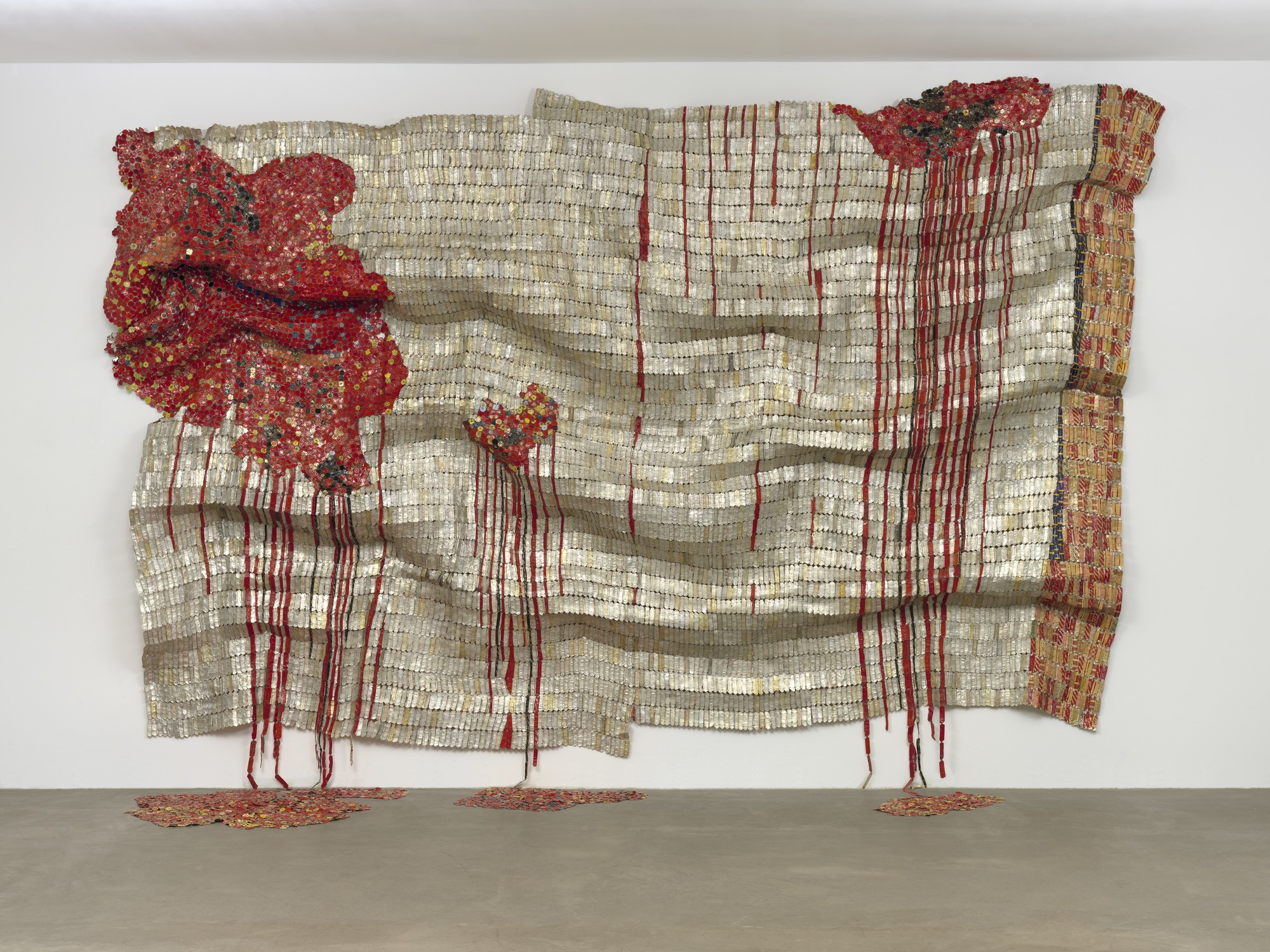
El Anatsui: Bleeding Takari II, 2007 (Museum of Modern Art, New York)
Last year the Court of Justice of the European Union issued two judgments on the Syrian refugee crisis. Both cases concerned Europe’s externalization of migration policy – i.e. the legal and practical measures taken to enforce refugee exclusion outside or at the borders of the territories of EU member states. These policies have been labeled as the politics of non-entrée by Hathaway & Gammeltoft-Hansen. In the judgments, the Court decided that it was not competent to rule on the cases because it had no jurisdiction. As I have argued more extensively in an article published open access in the Journal of Refugee Studies, the result of this is that law is not only an instrument for excluding people from European territory. The exclusion now runs through law itself. Although European fundamental human rights law is still formally neutral, the exclusion of non-Europeans is becoming a core element of European law.
Preventing genocide is not always successful. But this time, by closing the borders Europe has ensured that the necessary palliative care is also limited to the minimum. Read the full article on Open Democracy.
A Dutch version was published in NRC-Handelsblad on 15 December 2016.
Op 11 juli 1995 viel Srebrenica. Hoogleraar migratierecht Thomas Spijkerboer vreest dat de geschiedenis zich herhaalt in de vluchtelingendeal met Turkije. Acht tekenen aan de wand.